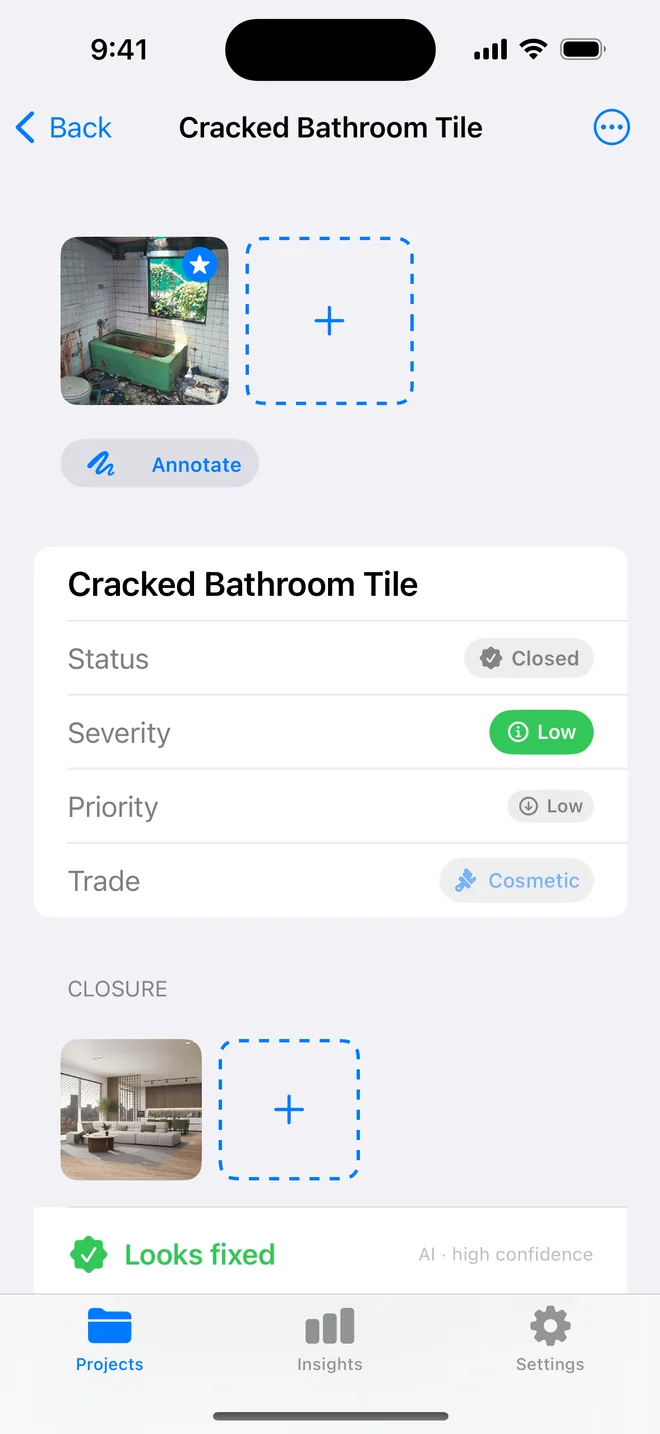
Step by step
- Observation: 'Diagonal crack 1.5 mm at its widest, from the top-left corner of the door frame, 400 mm long.'
- Evidence: the wide shot and the close-up with scale, dated.
- Cause: 'consistent with plaster shrinkage', or nothing, if you are not sure.
- Recommendation: 'monitor; fill and redecorate at the end of the defects period; re-inspect if it exceeds 3 mm.'
- Severity and trade, then the next one.
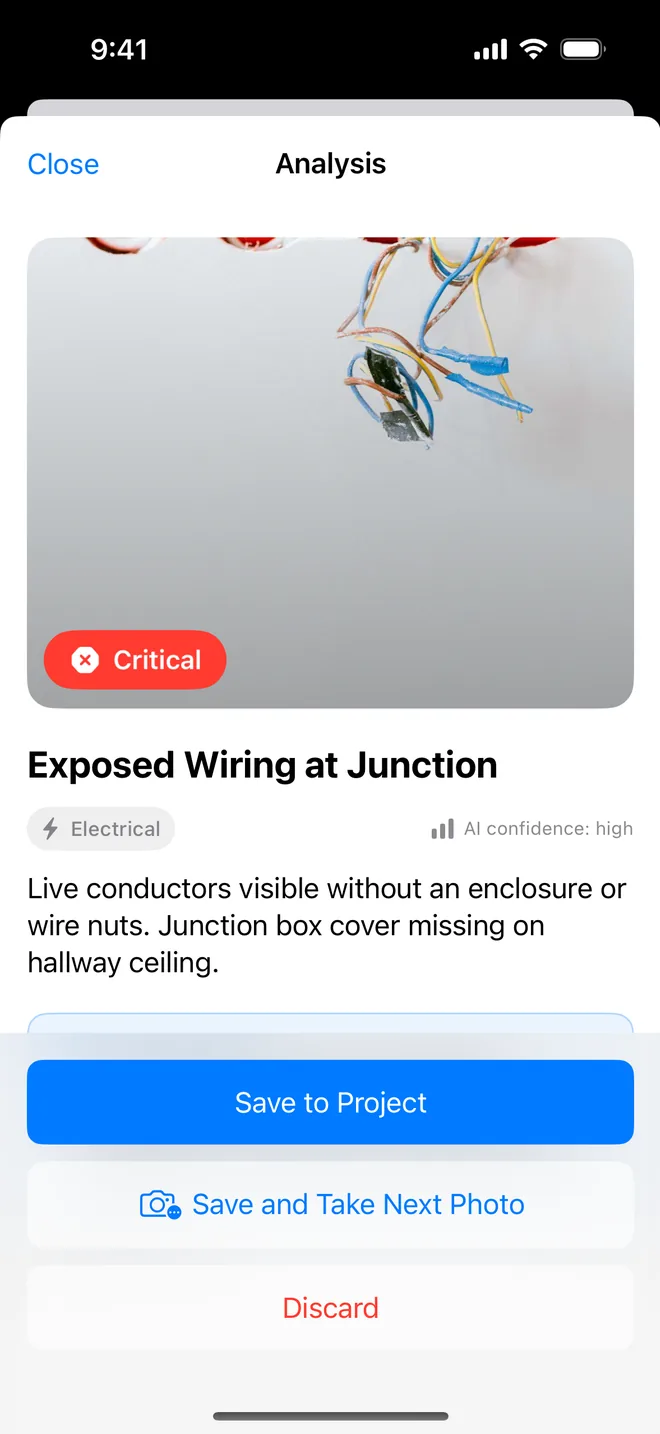
A worked example, start to finish
Here is one defect written the way a report should carry it, followed by why each part is there.
Location: Ground floor, living room, north wall, above the door to the hall.
Observation: Diagonal crack from the top left corner of the door frame, about 400 mm long, up to
1.5 mm wide at the frame.
Evidence: Photo 1, wall and door for location. Photo 2, crack with a tape for scale.
Assessment: Pattern consistent with drying shrinkage of plaster around an opening. No sign of
movement in the frame; door operates freely.
Severity: Low.
Recommendation: Monitor. Make good and redecorate at the end of the defects period. Re-inspect if the
width exceeds 3 mm or the door starts to bind.
The location lets anyone find it. The measured observation stops it being dismissed as "a hairline". The assessment is cautious because a photo cannot prove a cause. The recommendation says what should happen and when, without telling the plasterer how to hold a trowel.
Consistency across the report matters as much as any single item. Use the same severity for the same kind of defect throughout, so the reader can trust the summary.
Related questions
Where do my private notes go?
In the inspector notes field. Report options can keep notes out of the client's copy while they stay in yours.
Should I name the responsible contractor?
Name the trade or the assignee the contract makes responsible; leave liability to the people paid to decide it.
Try it on your next walk
Free to download; the first project is free for good. No account.
Download on theApp Store