Step by step
- Get the compartment plan first; without it the first item is 'no compartment plan on site'.
- At each penetration: photograph both faces, measure the opening, list the services one by one.
- Identify the seal (coated batt, intumescent sealant, collar, wrap) or write that you cannot.
- Record the location to the wall and the point on it, level, grid, room either side, above ceiling or in riser.
- Grade high; critical if the building is occupied and the breach protects an escape route or bedrooms.
- Ask for the installer's certificates and the tested-system reference at handover.
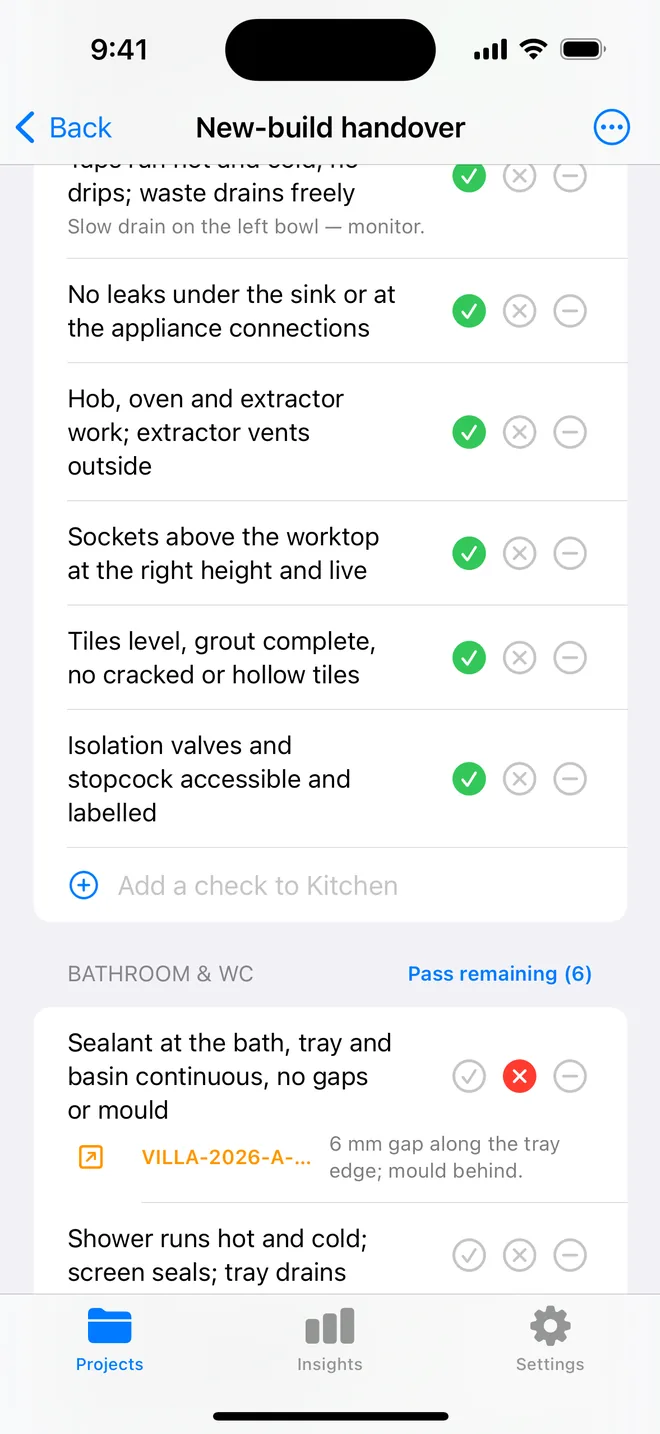
The first-fix and fire safety walk templates carry the stopping checks; a Fail creates the item with the location and the safety trade filled in, and the photos taken before the void is closed are the evidence you will be asked for later.
Related questions
Is expanding foam fire stopping?
Ordinary PU foam is not. Only a fire-rated foam used within its tested limits counts, and it is rarely the right product for a bundle of services.
Who is responsible for fire stopping?
Usually the trade that made the hole, and, on site, whoever the fire-stopping package was let to. Name what you saw; the contract names who fixes it.
Try it on your next walk
Free to download; the first project is free for good. No account.
Download on theApp Store