

Part of the guide: The Complete Guide to Inspection Reports: Structure, Evidence, Sign-off and Examples
The defects liability period is the time after practical completion during which the contractor must return to fix defects that appear in its work. It is set by the contract, commonly twelve months on commercial projects, though six months, eighteen months and two years are all used. The owner notifies defects in writing as they appear, the contractor fixes them, and at the end of the period a final inspection closes the list and the remaining retention is released.
It is not a warranty that covers everything, and it is not the end of the contractor's liability: defects found later can still be claimed, but through a slower and more expensive route. That makes the period the most useful window the owner has.
What the contracts call it
- Australia (AS 4000 and similar): defects liability period, stated in the contract annexure.
- United Kingdom (JCT): rectification period, six months unless the contract states otherwise; many contracts set twelve.
- United Kingdom (NEC4): the defects date, stated in the contract data, often 52 weeks after completion.
- United States (AIA A201): a one-year correction period after substantial completion.
- New Zealand: the defects notification period under NZS 3910 on commercial work; for residential building work the Building Act sets a twelve-month defect repair period after completion.
Residential work often has additional statutory protection that runs much longer, such as the statutory warranties under the Home Building Act 1989 in New South Wales. Those sit alongside the contract's period rather than replacing it.

Who does what during the period
The owner or its representative notifies defects in writing, as they appear, with enough detail for the contractor to find and price them. On a commercial building this is usually the facilities manager or the contract administrator; on a home, the owner.
The contractor returns to fix notified defects within the time the contract allows, and arranges access with the occupier. It is responsible for its subcontractors' work in the same way as before handover.
The contract administrator or superintendent decides disputes about whether an item is a defect, issues the final schedule or certificate, and certifies the release of retention.
What is not normally covered: damage caused by the occupier, wear and tear, items the owner supplied, and maintenance such as resealing or adjusting doors after normal use. Deciding which is which is easier when the condition at handover was recorded with dated photographs.
How to track defects during the period
- One list, continuing from handover. New defects join the handover punch list with the next number, so the history of the building stays in one place.
- A date on every notification. The date the defect was reported decides whether it falls inside the period.
- Photographs at notification and at closure. Before and after, from the same position.
- A review a month before the end. Walk the building, add anything outstanding, and send the list before the period expires.
Retention and the end of the period
Retention (retainage in the US, holdback in Canada) is the part of each payment the owner keeps until the work is complete. In UK practice, half is commonly released at practical completion and the other half at the end of the defects period, once the final schedule of defects has been made good. The release is certified, not automatic, so the final inspection and the paperwork matter to both sides.
If the contractor does not return to fix notified defects, most contracts let the owner have them fixed by others and recover the cost, often from the retention. The notice requirements in the contract need to be followed exactly for that to work.
Common mistakes
- No diary date for the end of the period. The period ends whether or not anyone walks the building.
- Verbal notifications. A defect mentioned to a site manager on the phone has not been notified.
- Separate lists for handover and later defects. The contractor and the owner end up with different numbers for the same item.
- Treating the period as the limit of liability. Latent defects can usually still be claimed after it ends, within the limitation periods of the relevant jurisdiction.
What to do next
Find the length of the period in your contract, diarise its end and a walk a month before, and keep one numbered list from handover onwards with a date and a photo on every item. Notify in writing, and close each item only when the fix has been checked.
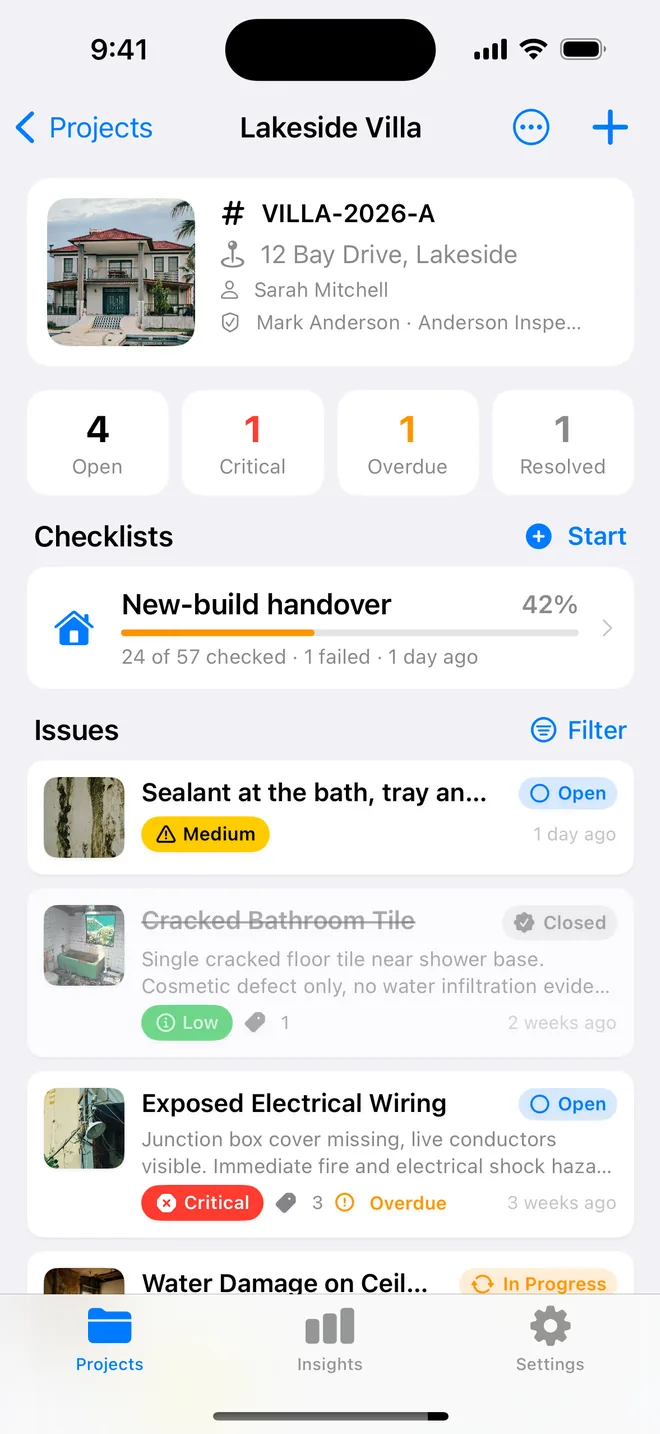
Punch List AI keeps handover items and later defects in one project, with the time on every photo, and prints the list with before and after pictures for the final inspection.
Track the defects period on your phone
Free to download. One numbered list from handover to the release of retention.
Download on theApp StoreQuestions people ask
How long is a defects liability period?
Whatever the contract says. Twelve months is common on commercial work; JCT's rectification period defaults to six months if none is stated; AIA A201 uses a one-year correction period.
Is the defects liability period a warranty?
No. It is the contractor's obligation, and right, to return and fix defects in its work during the period. Longer statutory and contractual liabilities usually continue after it ends.
What happens if the contractor does not fix defects?
Most contracts allow the owner, after proper notice, to have the work done by others and recover the cost, often from the retention.