

Part of the guide: The Site Inspection Checklist to Run on Every Walkthrough
Quality assurance (QA) is the set of plans and processes that give confidence the work will meet its requirements: the quality plan, the inspection and test plans, procedures, training and audits. Quality control (QC) is the checking of the work itself against those requirements: inspections, tests, hold points and punch lists. ISO 9000 draws the same line: QA provides confidence that quality requirements will be fulfilled, QC is focused on fulfilling them. On a site, QA asks whether the team is set up to get it right; QC asks whether it did.

What QA looks like on a project
- A project quality plan that says how quality will be managed: responsibilities, procedures, records.
- Inspection and test plans for each package, with hold and witness points. See hold point vs witness point.
- Submittals and approvals: materials, shop drawings and samples approved before they are used.
- Training and competence: the right people doing the work and the checks.
- Audits of whether the plan is being followed, by the contractor's quality manager or the client.
What QC looks like on site
- Inspection of each stage against the drawings and specification, at the points the ITP sets.
- Tests: concrete slump and cubes or cylinders, pressure tests, air tightness, electrical testing, commissioning.
- Recording and dealing with problems: punch list items for minor defects, non-conformance reports for work that needs a decision. See non-conformance reports.
- Verification that fixes have been made, with evidence.
On US federal projects, the US Army Corps of Engineers formalises QC as the contractor's quality control with a three-phase inspection process for each definable feature of work: preparatory, initial and follow-up. It is a useful model even where it is not required: agree the requirements before starting, check the first piece of work closely, then keep checking as the work continues.


Who does what
The contractor is responsible for the quality of its work and runs both QA and QC for it: a quality manager for the system, site engineers, supervisors and the trades for the checks. The client and its consultants provide quality assurance of their own, reviewing the contractor's plan, auditing it, and carrying out their own inspections at hold points and at completion. The punch list at the end is a QC tool, but the number of items on it is a QA measure: a long list means the system did not catch defects while the trades were still on site.
Common mistakes
- A quality plan nobody reads. QA that exists only for the tender does not change what happens on site. Keep it short and use it.
- QC only at the end. A snagging walk at completion is the most expensive point to find a defect. Check the first installation of every activity closely.
- Checks with no record. An inspection that is not recorded did not happen, as far as anyone else is concerned.
- Not learning from the punch list. Look at which trades and activities produce the most items and change the process for the next job.
What to do next
Write a short quality plan that names who checks what and when, turn the checks into inspection and test plans and checklists, record every inspection with photographs, and review the punch list at the end of each job for patterns. QA is the plan; QC is the evidence that the plan worked.
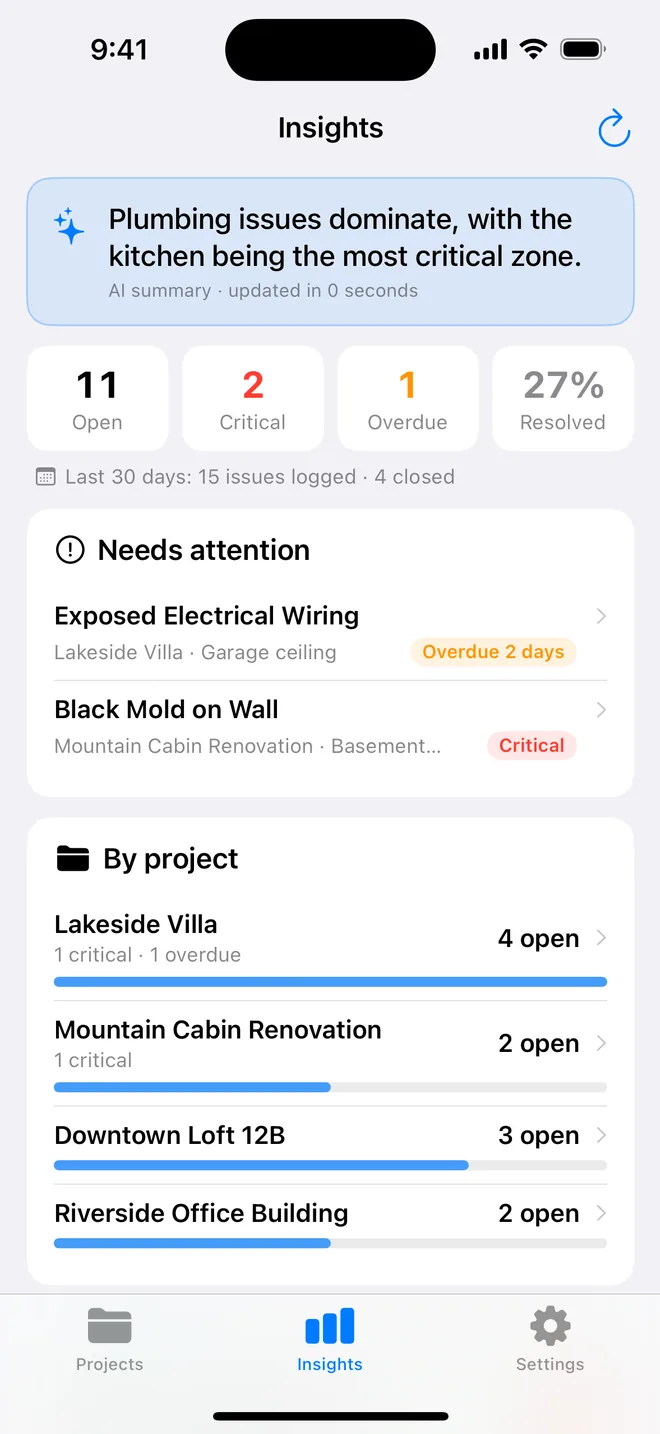
Punch List AI covers the QC record: checklists walked with Pass, Fail and N/A, items with photos, owners and due dates, and Insights showing which trades and locations keep producing defects.
Keep the QC record on your phone
Free to download. Checklists, photos and a dated report for every inspection.
Download on theApp StoreQuestions people ask
Is a punch list QA or QC?
QC: it checks the finished work against the requirements. How long the punch list is tells you something about QA, because a good quality system catches most defects earlier.
Who is responsible for quality control on a construction project?
The contractor, for its own work and its subcontractors'. The client and its consultants check it through their own inspections and audits.
What is an example of QA in construction?
A project quality plan, inspection and test plans, material approvals, training records and audits of whether the plan is being followed.